
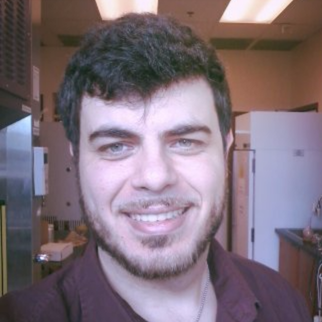
Manuel PETROSELLI
Impegni settimanali
Link utili
Afferenza
Ricevimento e Altre Informazioni
Lunedì dalle 13.30 alle 14.30, esclusivamente previa richiesta e prenotazione via email all'indirizzo: manuel.petroselli@uniupo.it
Didattica
CV
Pubblicazioni
Ricerca
We are a synthetic chemistry group in supramolecular
chemistry and nanotechnology, based at the University of Eastern Piedmont (UPO)
in the Department of Science and Technological Innovation (DISIT) in
Alessandria.
Research Group Approach & Philosophy
Our research applies key concepts of supramolecular chemistry, such as host-guest chemistry, molecular self-assembly, molecular recognition, template-directed synthesis, and biomimetics, to organic chemistry, catalysis, chemical biology, and radical chemistry.
Supramolecular chemistry
focuses on the weak, reversible non-covalent interactions between molecules such
as hydrogen bonds, halogen bonds, van der Waals forces, the hydrophobic effect, and
electrostatic interactions.
Our group aims to exploit these interactions to
fine-tune and modulate chemical properties
and reactivity of molecular systems, both in solution and solid-state, enabling reversible changes to their chemical structures or to the equilibria in which they are involved.
Our group also performs DFT studies on a dedicated server to support the experimental evidence and to interpretate experimental data.
Additionally, we aim to apply supramolecular chemistry
and non-covalent interactions
to design and create stimuli-responsive dynamic systems that can reversibly
produce chemical responses and perform complex tasks,
mimicking the behavior of biological enzymes.
Website: The Group Website is under construction and will be available soon! Stay Tuned!
Current Research Fundings
- RSC Research Fund Grant from Royal Society of Chemistry (RSC) in February 2026 for the project "Supramolecular Control of Radical Reactivity: From Inhibition to Catalysis (SURICA)" .
- Starting Kit 2026 from University of Eastern Piedmont (UPO) in December 2025 for early-career researchers with an international career.
Vacancies
If you are interested in tuning chemical systems through
non-covalent interactions,
or you are passionate about dynamic systems and
equilibria,
please contact Manuel directly to join the team.
We highly encourage talented doctoral and postdoctoral researchers to apply for independent
fellowships that will support their future career development.
Please contact Manuel if you have experience in organic synthesis, physical organic chemistry, supramolecular chemistry, etc., and consider applying for Marie-Sklodowska-Curie, Unesco fellowship, or other suitable fellowships.
Related Publications
1. W. Pan, A. Grigoryeva, C. Bacchiocchi, P. Ballester, L. Valgimigli, M. Petroselli, Enzyme-like Hydrogen Atom Transfer (HAT) Based Endo-Functionalized Molecular Receptors, Org. Lett., 2025, 27, 51, 14201-14206 (Link)
2. G. Zirpoli, M. Petroselli, A Column Chromatography-Free Protocol for the Synthesis of Water-Soluble Cavitands, J. Org. Chem., 2025, 90, 28, 9770-9775 (Link)
3. Petroselli et al., Molecular Balances as Physical Organic Chemistry Tools to Quantify Non-Covalent Interactions, Chem. Eur. J., 2025, 31 (16), e202404351 (Link)
4. Santonocino et al., Smartphone-Based Sensing of Cortisol by Functionalized Rhodamine Probes, Chem. Eur. J., 2024, 30, e202401201 (Link)
5. C. Bacchiocchi, M. Petroselli, Elucidation of the Mechanism of the Esterification of Boric Acid with Aliphatic Diols: a Computational Study to help set the Record Straight,
Chem. Comm., 2024, 60, 12239 (Link)
6. Petroselli et al., C-H---X-C Bonds in Alkyl Halides drive Reverse Selectivities in Confined Spaces, Chin. Chem. Lett., 2023, 34, 107834 (Link)
7. Petroselli et al., Kinetic vs. Thermodynamic Control of beta-Functionalized Cyclic Ketones: a Theoretical Investigation of Regioselective Formation of Enolates,
Org. Chem. Front., 2022, 9, 6205 (Link)
8. Petroselli et al., Highly Selective Radical Monoreduction of Dihalides Confined to a Dynamic Supramolecular Host, Chem. Eur. J., 2021, 27, 3284-3287 (Hot Paper - Link)
9. Petroselli et al., Radical Reactions in Cavitands Unveil the Effect of Affinity on Dynamic Supramolecular Systems, J. Am. Chem. Soc., 2020, 142, 2396-2403 (Link)
10. Petroselli et al., Lipophilic N-Hydroxyphthalimide Catalysts for the Aerobic Oxidation of Cumene: Towards Solvent-Free Conditions and Back, Chem. Eur. J., 2017, 23, 10616-10625 (Hot Paper - Link)
Chem. Comm., 2024, 60, 12239 (Link)
Org. Chem. Front., 2022, 9, 6205 (Link)